Chapati Zanzibari
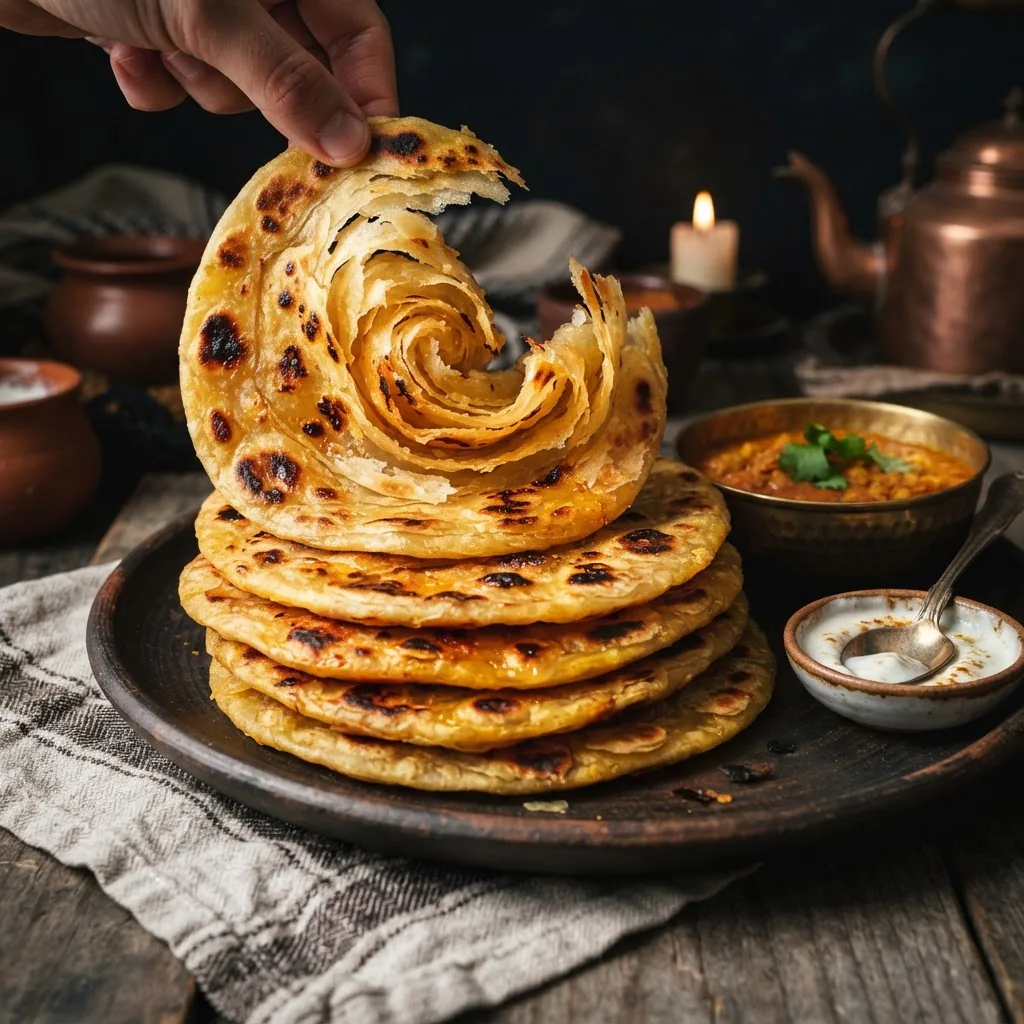
Zanzibar's chapati is India's gift to the Swahili coast, transformed by the island's own patience into something softer and richer than its ancestor: a many-layered, pan-cooked flatbread whose interior pulls in soft sheets, served at Forodhani Gardens night market with curry, with beans, or — the street's favorite — rolled around coconut-spiced beans or a fried egg. This is the bread of the Indian Ocean's trade winds: Indian technique, African pantry, eaten on the seawall at dusk.
- **Make a soft dough and oil it into layers.** The Zanzibari chapati's distinction is its richness — more oil in and on the dough than the Indian original — and its layering: the rolled dough brushed with oil, rolled again, and coiled before its final roll, so the finished bread pulls apart in soft sheets. That coil is the whole craft, and it is easier done than said.
- **The bridge:** none needed — flour, water, oil. A tawa or any flat pan works; the medium heat and the oil-brushed surface are the equipment.
Chapati Zanzibari
Prep: 30 minutes, plus 30 minutes resting · Cook: 25 minutes · Total: About 1 hour 25 minutes · Makes 8 chapatis
Ingredients
Ingredients
- 400 g all-purpose flour; ½ tsp salt; 1 tbsp sugar (about 10 g)
- 220 ml warm water (approximately); 3 tbsp neutral or coconut oil, plus more for layering (about 60 g)
- Optional warmth: ½ tsp cardamom, pounded, for the sweet street register
To serve (the Forodhani way)
- Coconut beans (the #18 logic on coconut milk — 400 g cooked beans simmered 10 minutes in 200 ml coconut milk with garlic, curry powder, and salt)
- Or a fried egg and #99 zhug; or honey for the morning's sweet version
Instructions
- **Knead and rest (30 minutes plus 30).** Knead the flour, salt, sugar, water, and 1 tablespoon oil 8 minutes to a soft, smooth, slightly tacky dough; rest covered 30 minutes. Checkpoint — the dough should be softer than bread dough — it will need to roll thin without springing back. The rest is what relaxes it; a rushed dough fights the pin.
- **Roll, oil, coil (10 minutes).** Divide into 8 balls. Roll one ball to a thin 20 cm round, brush its whole face with oil, and — with oiled hands — roll it up loosely from one edge into a loose cylinder, then coil the cylinder into a flat snail. Rest the coiled snails 10 minutes; then roll each gently to a thick 15 cm round, preserving the coil's hidden layers. Checkpoint — the coil should be visible as a faint spiral on the round's face. Do not press hard at the final roll — the layers must stay distinct, and the round will be thicker than the Indian chapati's paper thinness.
- **Pan-cook low and patient (3–4 minutes a side).** Cook each round on a medium, lightly oiled pan — 3 to 4 minutes a side, pressing gently at the edges with a spatula where it puffs, until both faces carry deep golden freckles and the bread's interior has steamed to softness. Checkpoint — eating test, torn from the bread's edge: the layers should pull apart in soft, oily sheets — the Zanzibari signature — the crust freckled gold, the interior tender and faintly sweet. Wrapped around the coconut beans, it is the Forodhani night's whole argument; the next morning, split, toasted in a pan, and honeyed, it is the island's breakfast. The bread keeps — wrapped in cloth a day, and it revives on the pan forever.
Troubleshooting
| Symptom | Cause | Fix |
|---|---|---|
| Bread single-layered | Coiled and rolled too hard, oil layer too thin | The gentle final roll; a generous oil brush |
| Interior doughy | Pan under-hot or rushed | 3–4 minutes a side at medium; press the puffs |
| Layers dry next day | Under-oiled dough | The dough wants its full 3 tablespoons |
Storage, Make-Ahead & Variations
- Keeps 1 day wrapped in cloth at room temperature (re-panned to revive); the coiled rounds freeze 2 weeks, thawed and rolled to order. The coconut beans keep 3 days. - Variations: the cardamom-sweet version, the chili-flecked savory one. The #16 msemen is this bread's Moroccan cousin in the cluster's layered-bread family.