Kaak Warka Rings
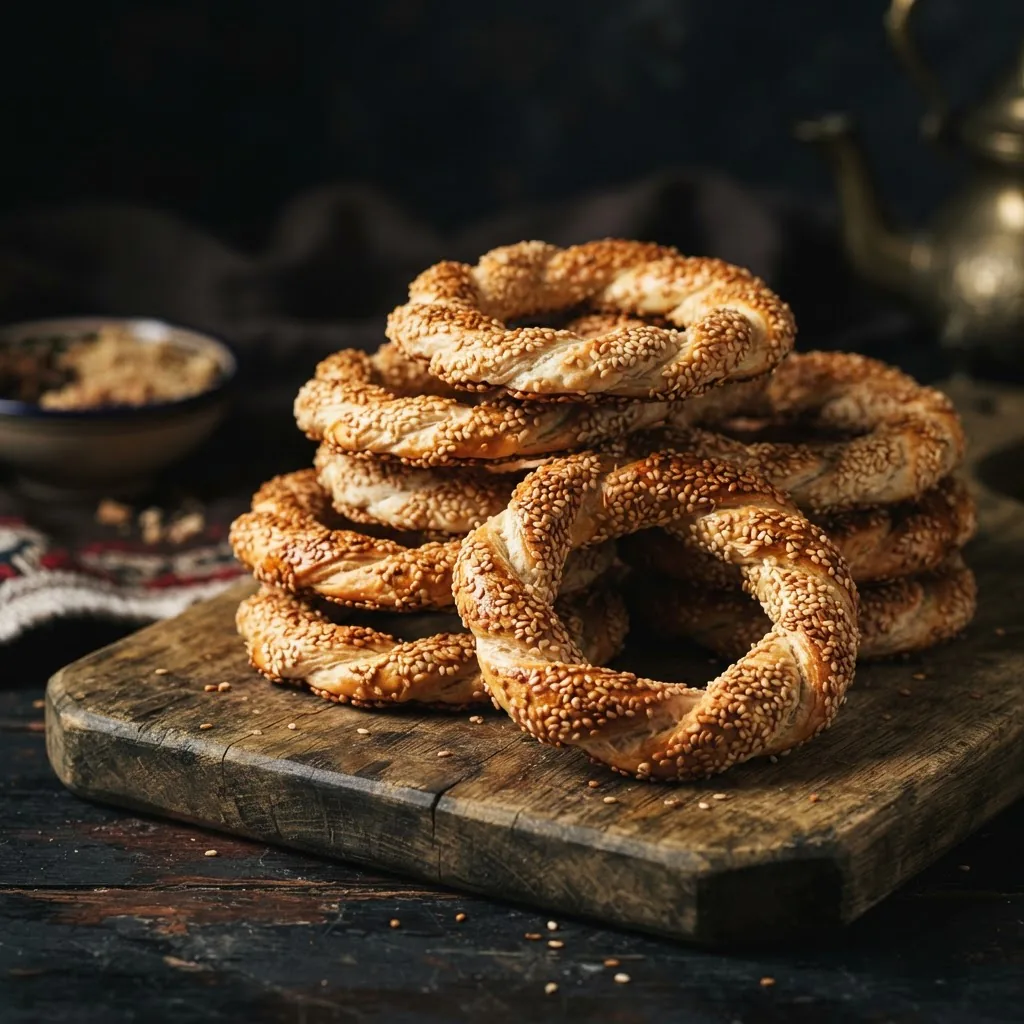
Kaak are the medina's pocket bread-rings — every North African city sells its own, braided or plain, sesame-blanketed or anise-scented, hanging from the carts in strings of a dozen. The warka version is the Tunisian street's crackly take: thin dough wound into rings, fried to a shattering gold or baked hard, and worn — literally, by children and by tradition — as bracelets before they are eaten. Street food that doubles as jewelry is the medina being the medina.
Quantities live in the recipe card.
Ingredients
- **Rest the dough twice — it braides better and fries lighter.** The dough's first rise is an hour; after shaping into ropes, a second 30-minute rest relaxes them for the winding. A rushed rope springs back and fights the ring.
- **The bridge:** none needed — the anise is the one voice, and it bridges nowhere (it is the kaak). The fried-versus-baked choice is honest both ways: fried runs crackly and rich, baked runs hard and durable, and the carts sell both.
Kaak Warka Rings
Prep: 45 minutes, plus 2 hours resting · Cook: 30 minutes · Total: About 3 hours 20 minutes · Makes about 20 rings
Ingredients
Ingredients
- 500 g flour; 1 tbsp sugar (about 10 g); 1 tsp instant yeast (about 4 g); 1 tsp salt
- 1 tsp anise seeds, lightly crushed (the Tunisian note — or ½ tsp each anise and fennel); 1 tbsp olive oil (about 13 g)
- 280 ml warm water (approximately)
- 100 g sesame seeds, toasted, for the blanket; a beaten egg (about 50 g) or a flour-and-water paste for the sticking
- Neutral oil, 2 cm deep at 175 °C for the fried version; or a 200 °C oven for the baked
Instructions
- **Make and rest the dough (1 hour).** Knead the flour, sugar, yeast, salt, anise, oil, and water 8 minutes to a smooth, medium-soft dough; rise covered until doubled. Checkpoint — the dough should be smoother than bread dough and carry the anise's perfume faintly through its rawness. Divide into 20 balls (about 40 g each), rest 10 minutes.
- **Roll, rope, and ring (30 minutes plus 30 resting).** Roll each ball under the palms to a rope 30 cm long and pencil-thin — patient, working from the center out — then wind each rope around two or three fingers into a ring or, better, twist two ropes into a light braid before closing the circle. Rest the formed rings 30 minutes, covered. Checkpoint — the ropes should be even and thin — the kaak's elegance is the ring's evenness — and the rings' joins pinched closed, because a loose join unwinds in the oil. The braid, where run, should be loose: tight braids fry dense.
- **The finish — fried crackle or baked hard.** Fried: brush each ring with egg (or the flour paste — the traditional sticker), press into the toasted sesame, and fry at 175 °C, turning once, 2–3 minutes a side to a deep gold. Baked: egg-and-sesame the same, then 200 °C for 20–25 minutes to hard gold, turned once. Checkpoint — eating test: the fried version's shatter — a crackle that gives to a faintly sweet, anise-perfumed interior, the sesame's toast on every fragment; the baked version's hard snap and keeping-quality — a dry, durable ring that softens in tea or milk. Children wear them first; everyone eats them after; the string of rings on the cart's hook is the recipe's own serving dish.
Troubleshooting
| Symptom | Cause | Fix |
|---|---|---|
| Rings unwound in the oil | Loose join or short rest | Pinch the join closed; the 30-minute rest |
| Interior doughy (fried) | Oil under-hot or ropes too thick | 175 °C; pencil-thin ropes |
| Baked rings soft next day | Under-baked | Hard gold, fully dry \u2014 they keep by being unyielding |
Storage, Make-Ahead & Variations
- The baked version keeps 2 weeks in a tin (the street's own pantry bread — its purpose); the fried keeps 2 days and re-crisps 3 minutes at 170 °C. The dough keeps 1 day refrigerated after its rise. - Variations: the honey-dipped finish, the orange-blossom version (#107's water). The #87 kaak anise rings are this recipe's holiday cousin on this site — the same perfume at the table's grander scale.