Bessara Fava Soup
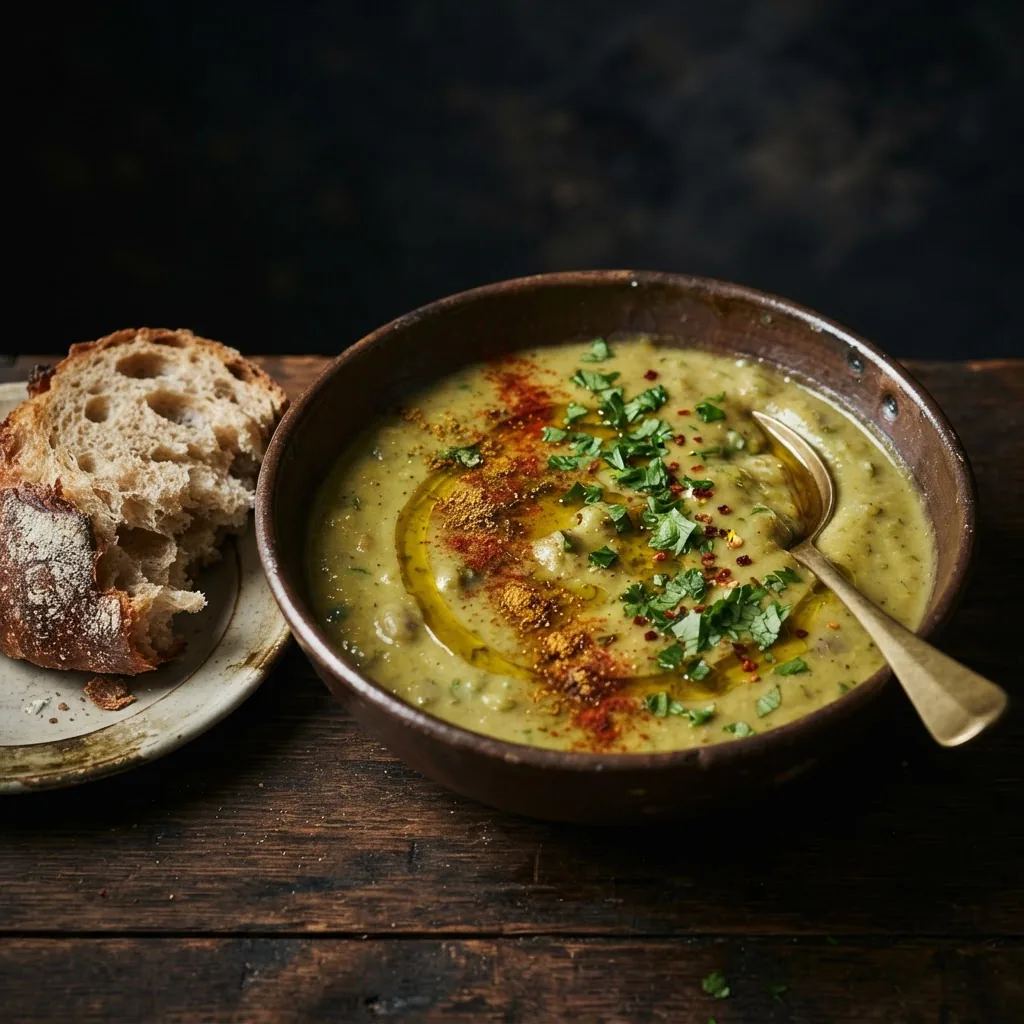
Bessara is winter's dawn in a bowl: dried fava beans simmered to velvet with garlic and cumin, blitzed to a pale-green cream, and served steaming with a slick of olive oil, a storm of paprika and cumin, and bread for the dunking. The carts sell it before the medina fully wakes — the workers' breakfast, a bowl of it costs pennies, and its heat and heft carry a man to noon.
Quantities live in the recipe card.
Ingredients
- **Soak the split favas fully — 8 hours minimum.** The peeled splits drink their water and cook to a purée; under-soaked ones stay gravelly, and no amount of blending fixes what the soak could have. The bridge: yellow split peas run close at a small loss of the fava's mineral depth; red lentils run too sweet and too fast.
- **The bridge for the garnish's olive oil:** it should be green and peppery if you can — bessara's creamy neutrality is the stage the oil performs on.
Bessara Fava Soup
Prep: 10 minutes, plus 8 hours soaking · Cook: 1 hour · Total: About 9 hours (mostly soaking) · Serves 4
Ingredients
Ingredients
- 400 g dried split fava beans (peeled — the yellow splits, about 400 g dry yielding 800 g soaked), soaked 8 hours or overnight
- 5 cloves garlic (about 20 g), sliced
- 1 tbsp cumin, plus more to finish; 1 tsp sweet paprika, plus more to finish
- ½ tsp salt, or to taste; a pinch of chile flakes or a spoon of harissa (#91) for the fire
- 1.2 litres water; 4 tbsp olive oil (about 50 g), the good green kind
- Bread (khobz or a country loaf), lemon wedges, and more cumin-paprika at the table
Instructions
- **Simmer everything together (50–60 minutes).** Drain the favas into a pot with the garlic, cumin, paprika, and 1.2 litres water; bring to a bare simmer and cook, uncovered or lid ajar, until the favas collapse utterly — 50 minutes to an hour, skimming any foam at the start. Checkpoint — a bean pressed against the pot's side should dissolve to paste with no graininess; the simmer's last 10 minutes are the difference between velvet and grit. The water should sit just above the beans at the end — a thick soup, not a stew.
- **Blitz to cream, season hard.** Blend the pot smooth (a stick blender in the pot is the cart's own tool), then season with salt and taste — the purée should be seasoned past comfort: it is about to be thinned by the oil and cooled by the bread. It should taste of fava, garlic, and cumin in that order. Checkpoint — the finished texture should pour slow off the spoon and coat it — a velvet, thinner than hummus, thicker than broth. Too thick: a splash of hot water; too thin: five more minutes on the flame.
- **Serve with the full garnish.** Each bowl: a spiral of olive oil across the surface, a pinch each of cumin and paprika, chile flakes if running, and the bread and lemon beside. Checkpoint — eating test: the first spoon hot and creamy — fava's gentle bitterness under garlic, cumin's warmth — then the oil's green fire where it pools, the lemon brightening the second spoonful, and the bread sopping the last of it. It should taste simple the way dawn tastes simple: one bowl, fully awake, nothing to prove.
Troubleshooting
| Symptom | Cause | Fix |
|---|---|---|
| Purée gritty | Under-soaked or under-simmered beans | The full soak; the collapse test |
| Soup gluey, pasty | Over-blended with too little water | Hot water by splashes to the slow-pour |
| Flavor flat | Oil or garnish shy | The garnish is half the recipe \u2014 pour it |
Storage, Make-Ahead & Variations
- Keeps 3 days refrigerated and improves (re-thin with water at the reheat); the garnish is always at the bowl. The soaked beans keep 2 days refrigerated. - Variations: the Egyptian foul's cousin (lemon-heavier, never blended smooth), the harissa stirred in. The #18 lablabi is bessara's Tunisian sibling — the chickpea's answer to the same dawn.